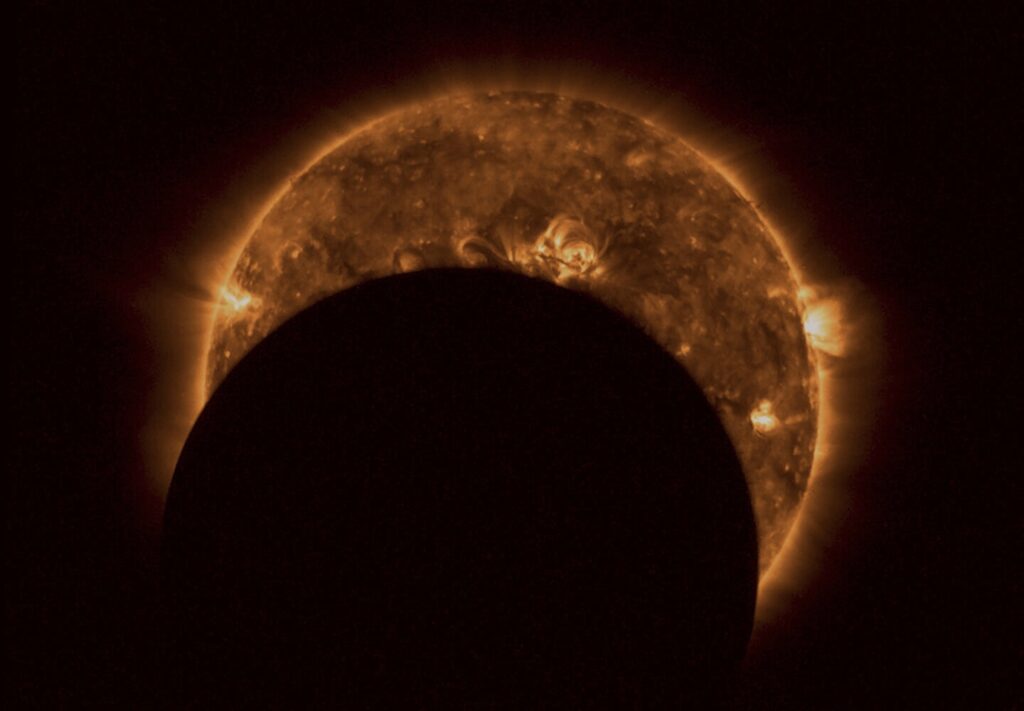
On the evening of Wednesday 12th August 2026, people across the UK will have the chance to witness one of the most dramatic solar eclipses visible from Britain in decades. Although the eclipse will not be total in the UK, more than 90% of the Sun will be covered by the Moon from many locations, creating an unforgettable deep partial eclipse.
What makes this eclipse especially memorable is its timing. The eclipse takes place during the evening as the Sun sinks towards the western horizon, producing the rare sight of a heavily eclipsed Sun at sunset. Observers will need a clear view towards the west or north-west to enjoy the best views.
Partial eclipse video
See this introduction explaining what a partial eclipse is, how to observe such events safely, for hints and tips, courtesy of the Society for Popular Astronomy.
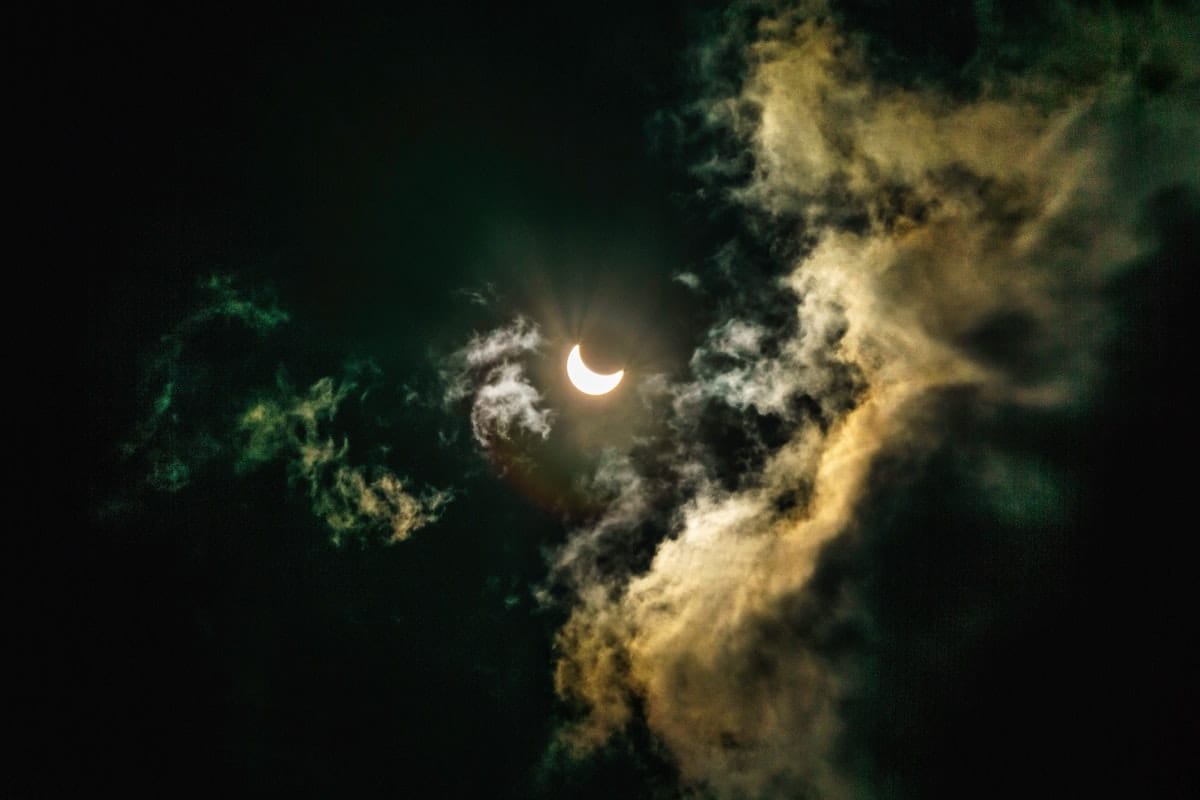
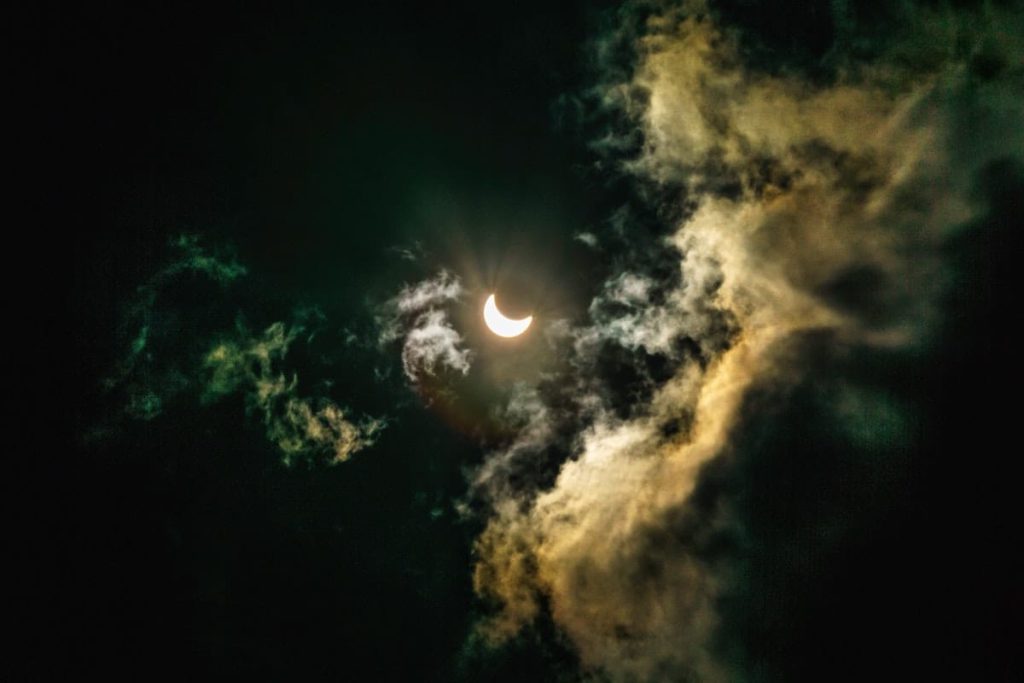
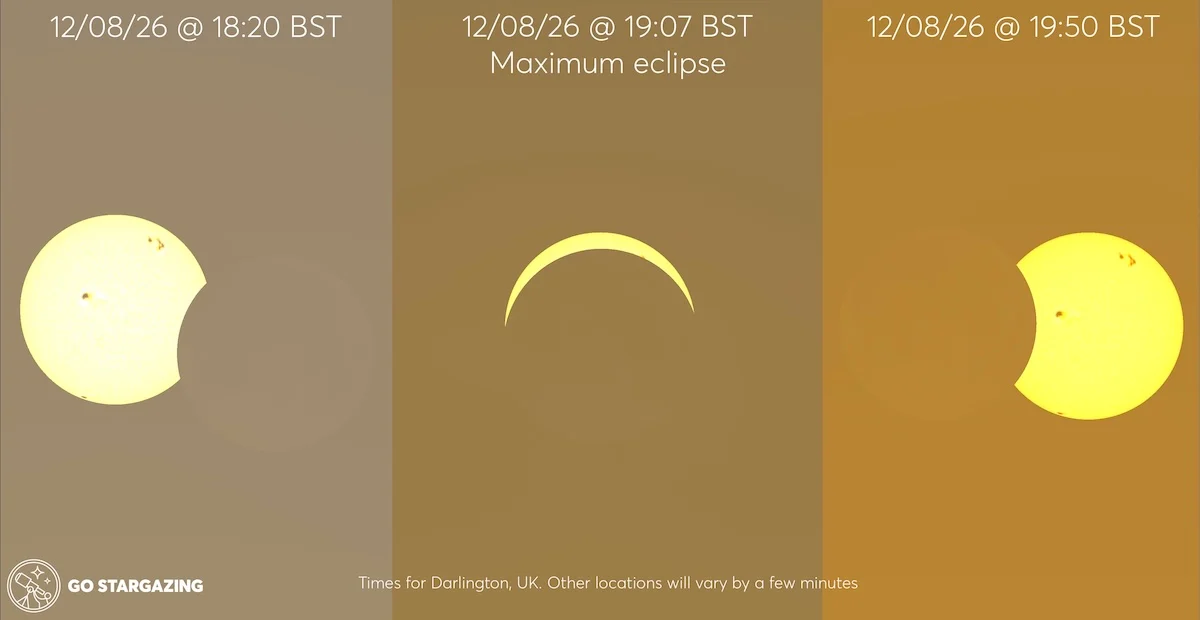 Example eclipse as viewed from Darlington, UK. Image courtesy of Go Stargazing
Eclipse map
The map below shows the path of Earth’s shadow, caused by the eclipsed Sun, passing across the North Sea. If you were on a boat underneath this shadow, you would experience a total solar eclipse. Observers in the UK however will see a partial eclipse, the amount of the Sun covered by the Moon and timings differs slightly based on location.
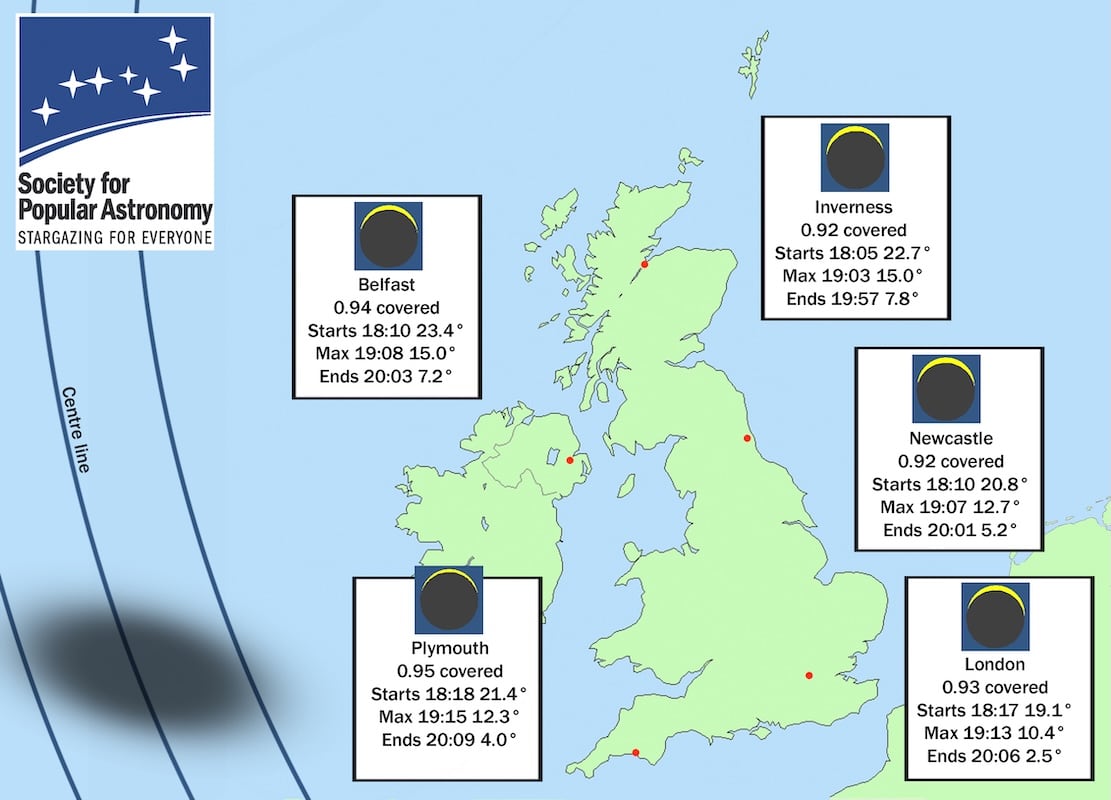 Eclipse timings courtesy of Society for Popular Astronomy
Eclipse timings across the UK
“First contact” is when the Moon begins to pass in front of the Sun and the eclipse begins. “Maximum eclipse” is when most of the Moon covers the Sun, and “Last contact” is when the Moon leaves the Sun and the eclipse ends. All times in BST.
| Location |
First contact |
Maximum eclipse |
Last contact |
| London |
6:17 pm |
7:13 pm |
8:06 pm |
| Canterbury |
6:16 pm |
7:12 pm |
8:05 pm |
| Southampton |
6:18 pm |
7:14 pm |
8:08 pm |
| Bristol |
6:17 pm |
7:13 pm |
8:07 pm |
| Plymouth |
6:19 pm |
7:06 pm |
8:00 pm |
| Norwich |
6:15 pm |
7:11 pm |
8:03 pm |
| Birmingham |
6:15 pm |
7:11 pm |
8:05 pm |
| Manchester |
6:13 pm |
7:10 pm |
8:03 pm |
| Preston |
6:12 pm |
7:08 pm |
8:02 pm |
| Edinburgh |
6:08 pm |
7:05 pm |
8:01 pm |
| Aberdeen |
6:06 pm |
7:03 pm |
7:57 pm |
| Belfast |
6:09 pm |
7:06 pm |
8:01 pm |
Eclipse glasses will be essential!
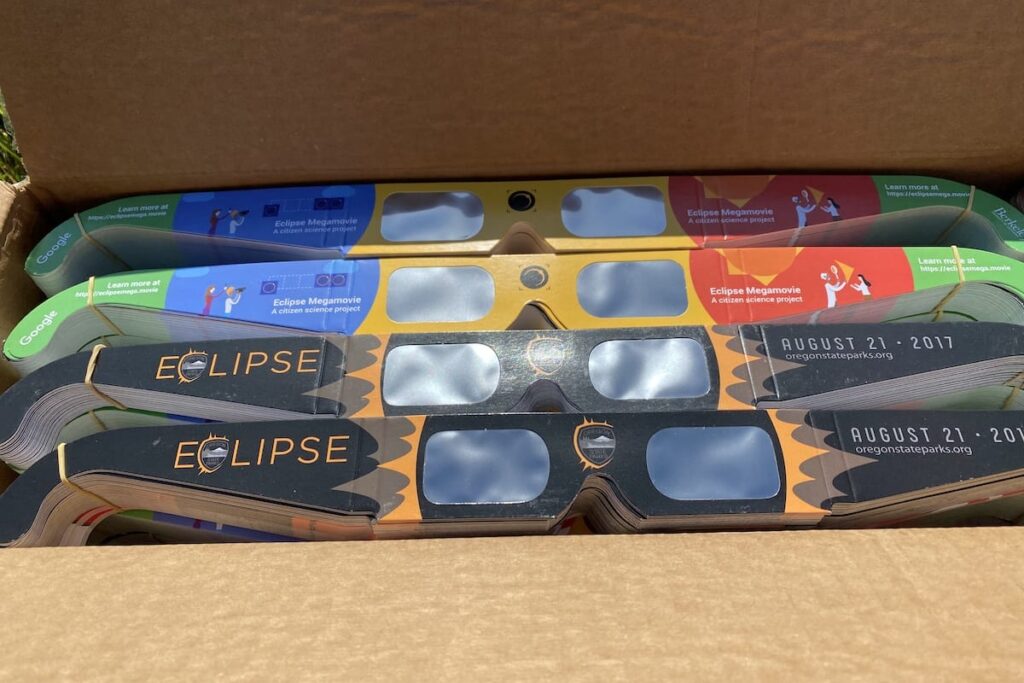
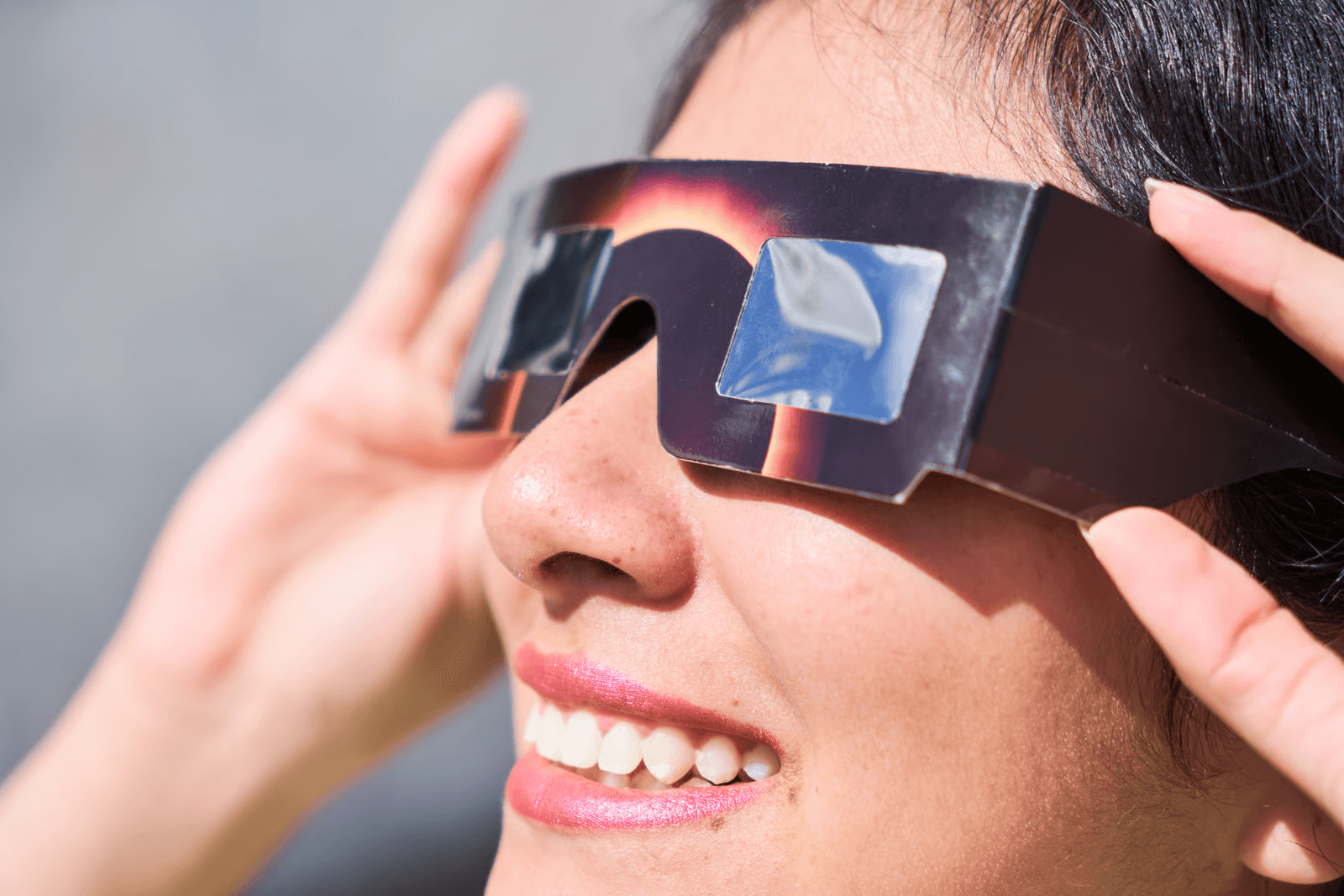
Even though the Moon will cover most of the Sun, the eclipse is still only partial from the UK. That means it is never safe to look directly at the Sun without proper protection. Certified eclipse glasses or approved solar filters will be required throughout the entire event. Ordinary sunglasses are not safe for solar viewing. Anyone planning to observe the eclipse using binoculars or telescopes must also ensure suitable solar filters are fitted correctly before observing.
Recommended eclipse glasses retailers
A rare evening eclipse
Unlike many eclipses that occur high in the daytime sky, this event unfolds as the Sun drops lower in the west during the evening. At maximum eclipse, the Sun will be only around 10–15 degrees above the horizon for much of the UK, giving the eclipse a dramatic sunset appearance.
This low-altitude eclipse means choosing the right observing location will be important. Coastal viewpoints, hills, open countryside, and elevated parks with an unobstructed western horizon are likely to offer the best views. This also offers an opportunity for photographers to get creative with their shots!
With deep eclipse coverage, sunset skies, and widespread visibility across the country, the 12th August 2026 eclipse is expected to become one of the UK’s most widely observed astronomical events for many years.