How to observe a partial solar eclipse
A partial solar eclipse is a fascinating celestial event that occurs when the Moon passes between the Earth and the Sun, covering only part of the Sun’s disc. Unlike a total solar eclipse, the Sun is never completely obscured, meaning special precautions must be taken throughout the entire event.
Whether you’re watching your first eclipse or you’re a seasoned observer, understanding the key stages of the eclipse and how to observe it safely will help you get the most from the experience.
The Three Key Stages of a Partial Solar Eclipse
First contact
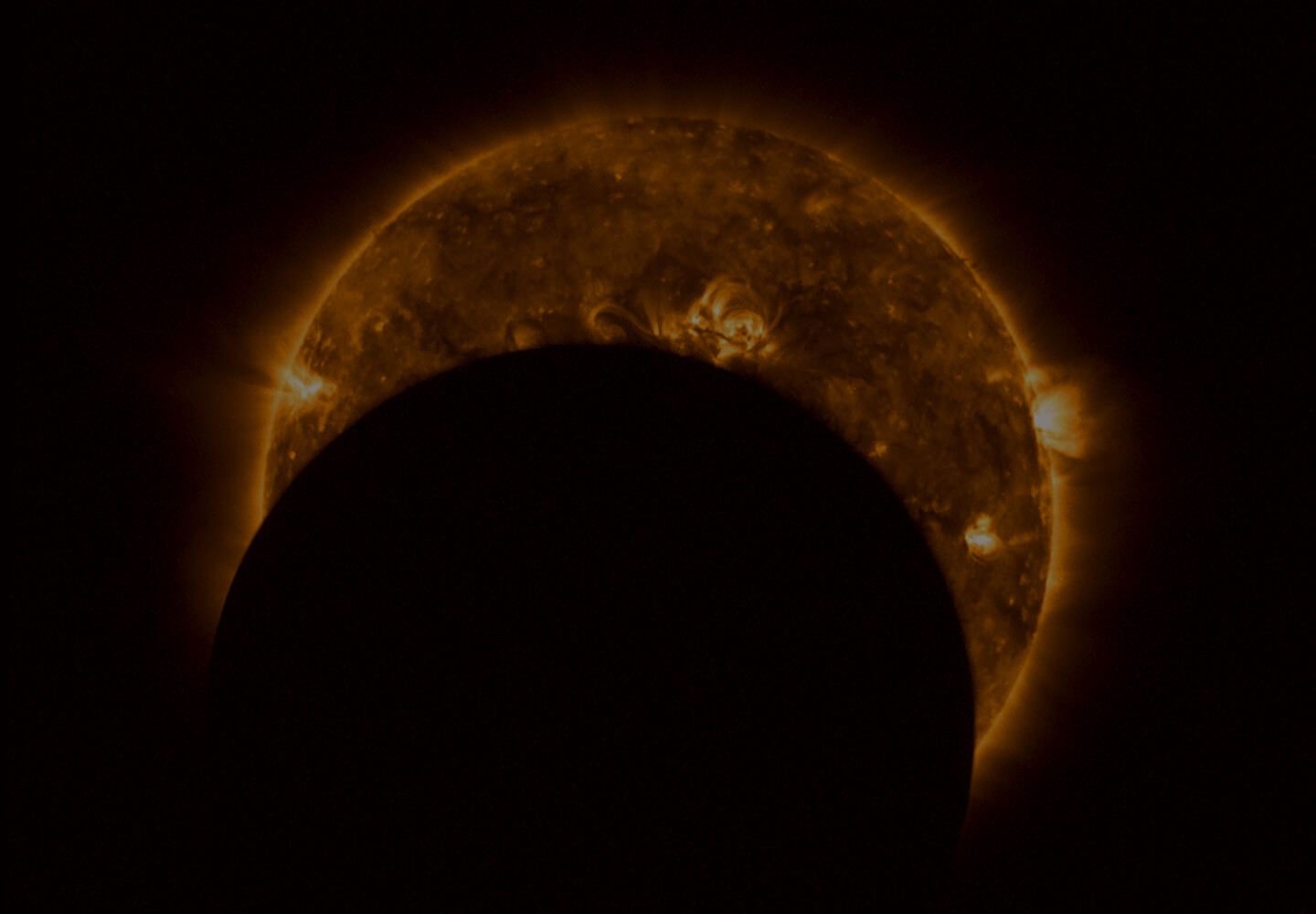
First Contact marks the official beginning of the eclipse. This is the moment when the edge of the Moon first appears to touch the edge of the Sun, creating a tiny “bite” in the solar disc. At first, the change can be difficult to notice, especially without magnification, but over the following minutes the Moon’s silhouette gradually becomes more obvious.
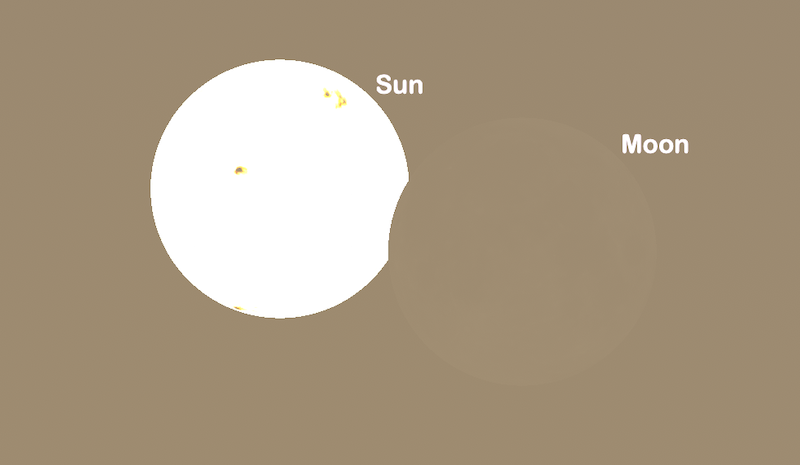 First contact, where the Moon begins to cover the Sun
Maximum eclipse
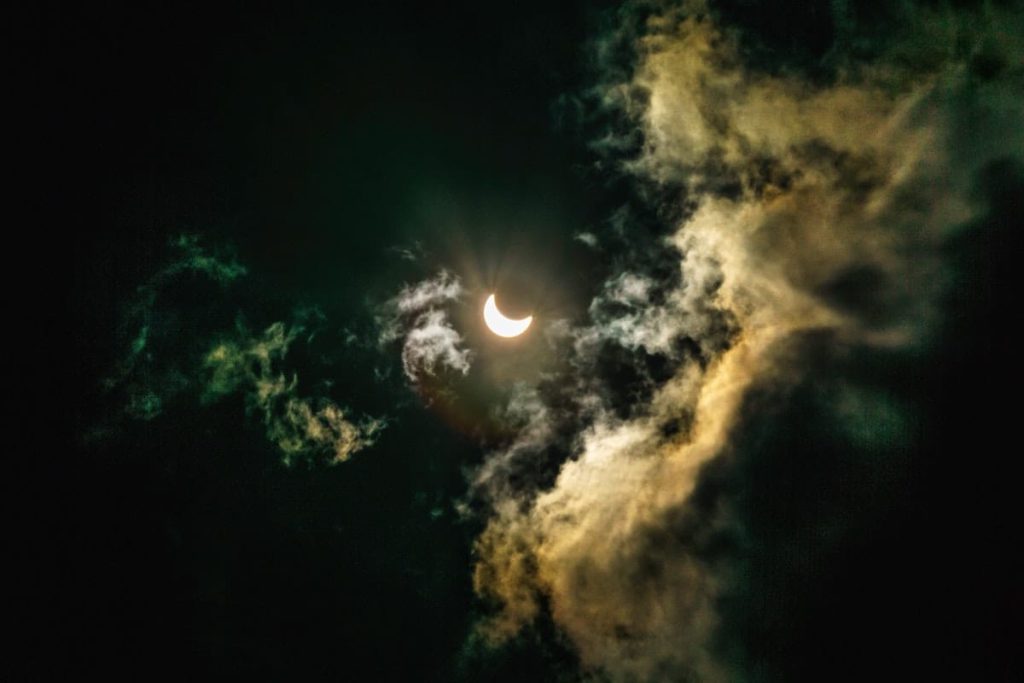
Maximum eclipse (sometimes called Maximum Phase) occurs when the greatest portion of the Sun is covered by the Moon. During a partial eclipse, the Sun never disappears completely. Depending on your location, the Moon may cover only a small fraction of the Sun or a very large percentage of it. The surrounding landscape may appear slightly dimmer, but daylight will remain.
You must continue using safe solar viewing equipment during maximum eclipse.
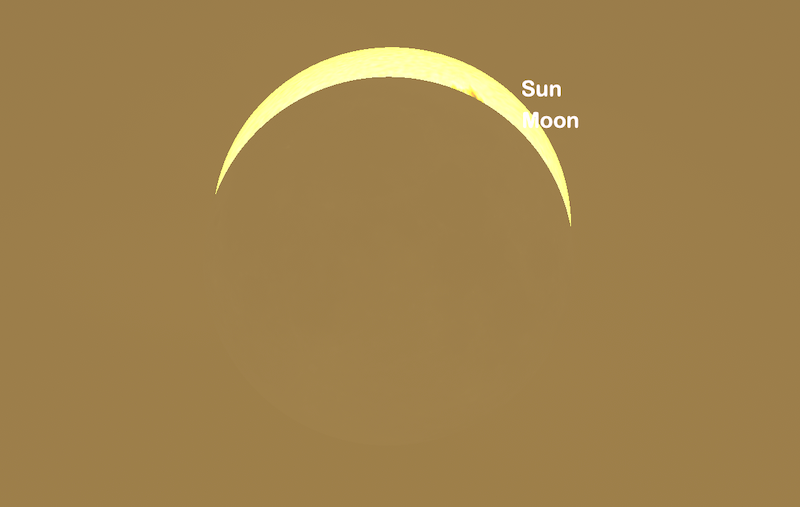 Maximum eclipse, where most of the Sun is covered
Last Contact
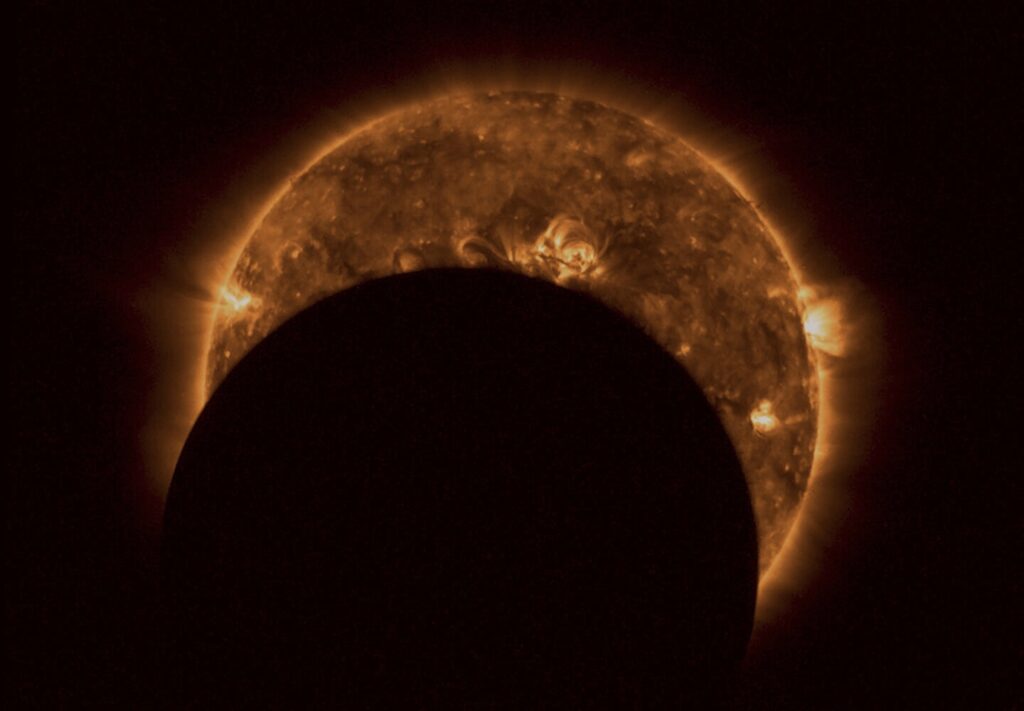
Last Contact marks the end of the eclipse. This is the moment when the Moon’s edge finally leaves the Sun’s disc and the Sun returns to its normal appearance. After Last Contact, the eclipse is over and normal daytime conditions resume.
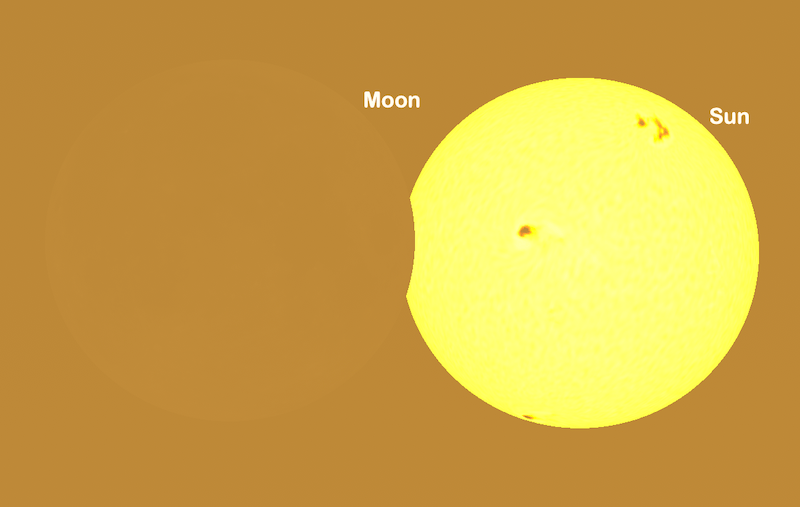 Last contact, where the Moon leaves the Sun’s disc
Why eclipse times vary by location
One of the most common questions eclipse observers ask is why published eclipse times don’t always match what they see. The answer is simple: every observer sees the eclipse from a slightly different position on Earth’s surface.
Because the Earth is round and the Moon’s shadow moves across it, the exact timing of First Contact, Maximum Eclipse, and Last Contact changes depending on your location. Someone observing from London may see the eclipse begin several minutes before or after someone observing from Manchester, Edinburgh, or Paris.
The amount of the Sun covered by the Moon can also vary significantly. In some locations the eclipse may be deep and dramatic, while elsewhere only a small portion of the Sun may be obscured.
For the most accurate information, always use eclipse predictions calculated specifically for your observing location.
Safety first: protect your eyes
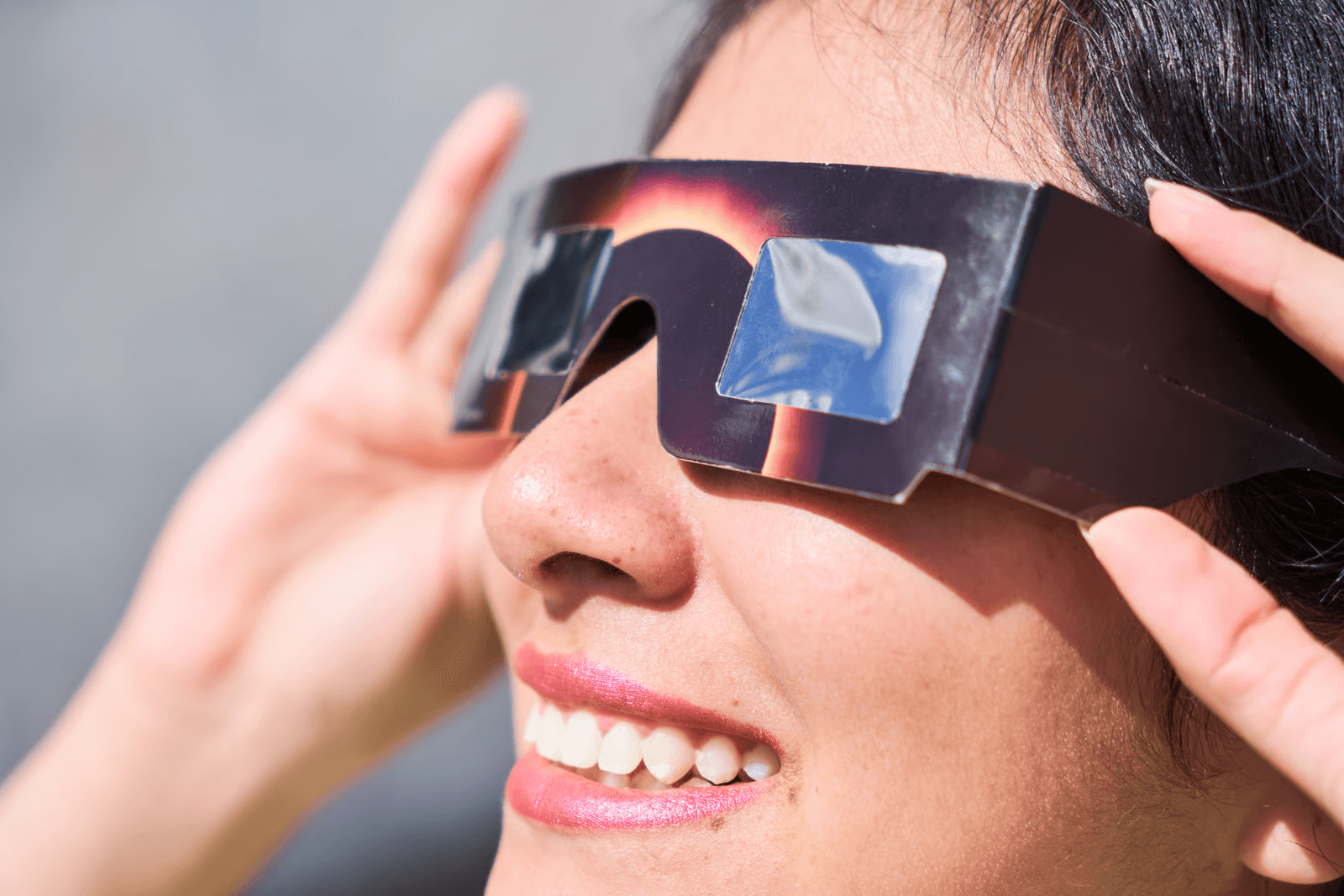
A partial solar eclipse must never be viewed directly with the naked eye. Because part of the Sun remains visible throughout the entire event, harmful solar radiation can still damage your eyesight. This damage can occur without pain and may be permanent. To observe safely, use:
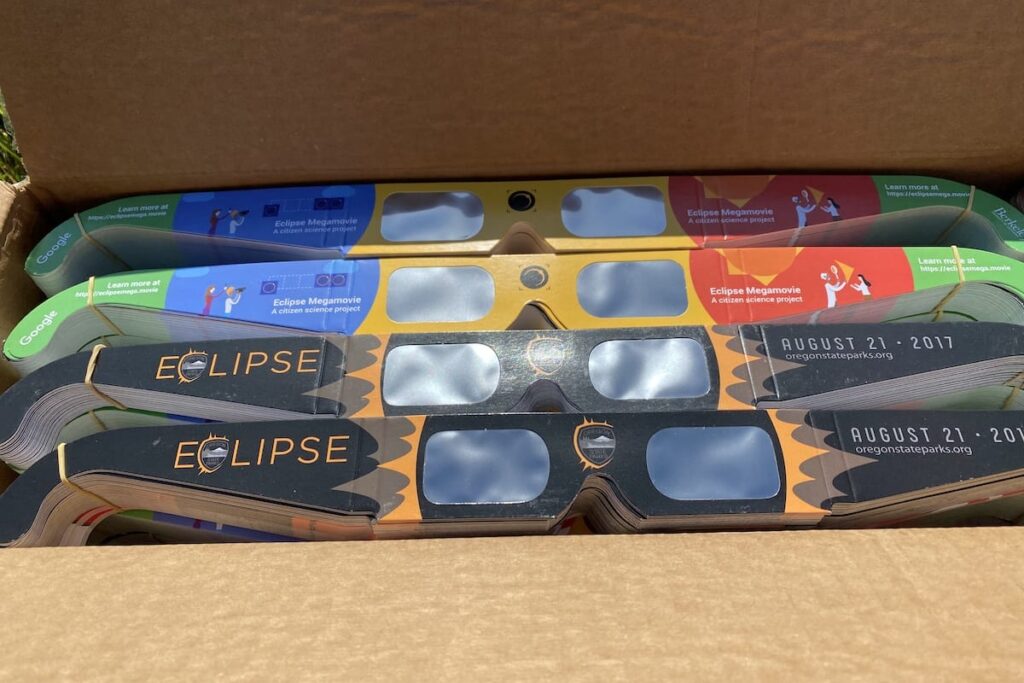
- Eclipse glasses that comply with the ISO 12312-2 safety standard
- Approved solar filters fitted securely to telescopes, binoculars, or cameras
- Indirect viewing methods such as pinhole projectors
Never use sunglasses, photographic film, smoked glass, CDs, DVDs, or other improvised filters.
Observing through telescopes and binoculars
Telescopes and binoculars can reveal remarkable detail during a partial eclipse, but they must be fitted with professionally manufactured solar filters placed over the front of the instrument. Never look at the Sun through an unfiltered telescope, binoculars, camera lens, or finder scope. Concentrated sunlight can cause severe eye injury almost instantly and may also damage equipment. We recommend looking up your local astronomy group or observatory who will very likely host an organised event where you can use specialist equipment with expert guidance.
Enjoy the experience
A partial solar eclipse unfolds slowly, often lasting several hours from First Contact to Last Contact. Take the opportunity to watch the changing shape of the Sun, photograph the event safely, and share the experience with family and friends.
By understanding the eclipse stages, checking local timing predictions, and using proper eye protection throughout the event, you can enjoy one of nature’s most impressive spectacles safely and confidently.