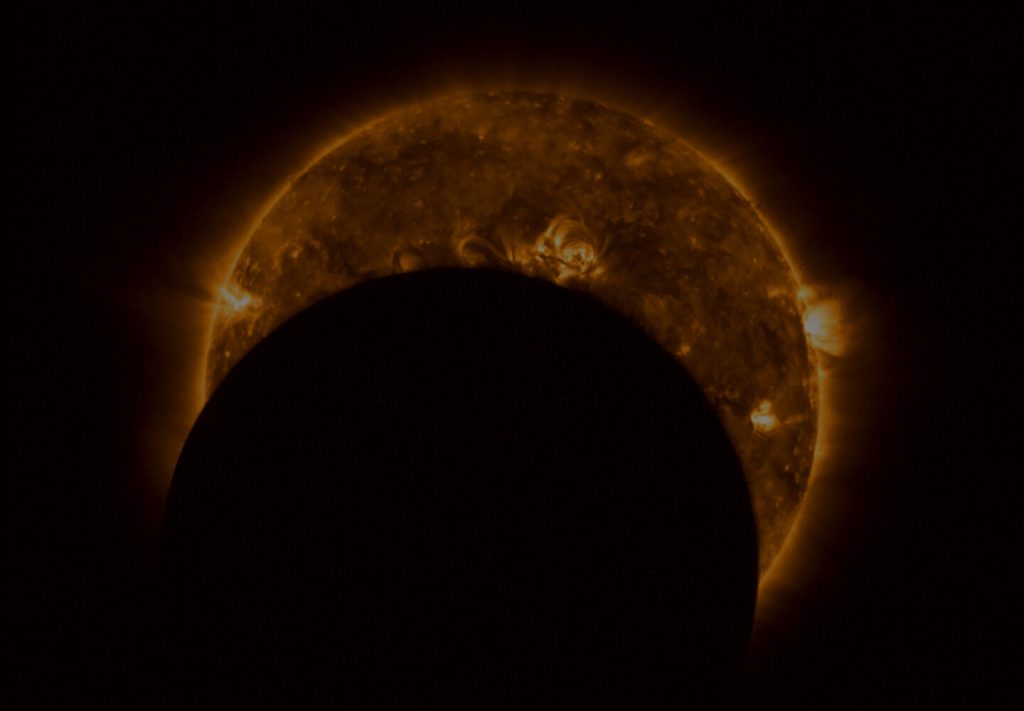
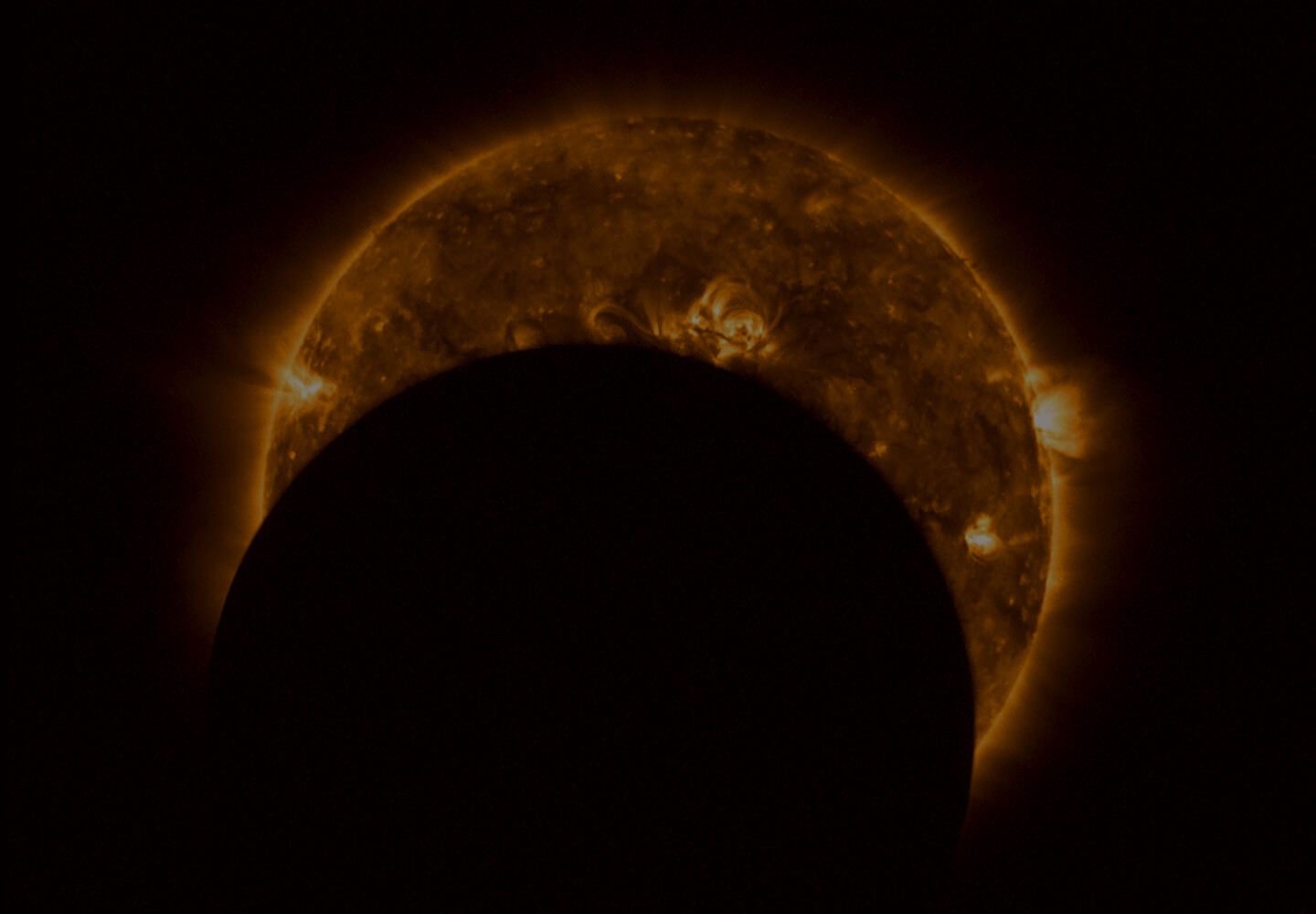
On Monday 2 August 2027, people across the UK will have the opportunity to see a partial eclipse of the Sun, as the Moon passes between the Earth and Sun and takes a large “bite” out of the solar disc.
The eclipse is part of the same spectacular celestial event that will produce a total solar eclipse across parts of southern Spain, Gibraltar, North Africa and the Middle East. From the UK we won’t experience totality, but a substantial partial eclipse will be visible — weather permitting.
What will the eclipse look like from the UK?
The eclipse will be visible throughout the UK during the morning of Monday 2 August 2027.
How much of the Sun is covered will depend on where you are. The eclipse will be deepest in the south of the UK, with progressively less of the Sun obscured as you travel north.
For example, around 44% of the Sun’s surface will be covered from Southampton, approximately 42% from London, 39% from Birmingham, 36% from Liverpool and 28% from Glasgow.
Maximum eclipse occurs at around 10:00am across much of the country.
What time is the eclipse?
Exact timings vary depending on your location, but the eclipse takes place roughly between 9:00am and 11:00am BST.
From London, the eclipse begins at 9:03am, reaches maximum at 10:00am and ends at 10:59am.
Further north, the eclipse is slightly shorter. From Edinburgh it begins at 9:11am, reaches maximum at 10:00am and ends at 10:51am.
We recommend being ready well before the eclipse begins so you can watch the Moon gradually move across the face of the Sun.
Where is the best place to see it?
Unlike an eclipse occurring close to sunrise or sunset, you shouldn’t need to travel to somewhere with an exceptionally low horizon.
The Sun will already be well above the horizon during the eclipse, so anywhere with a clear view of the morning sky should be suitable. A garden, park, playing field or other open space can provide a good observing location.
The most important factor will, of course, be the British weather!
You’ll need eclipse glasses
You must never look directly at the Sun without appropriate eye protection, including during a partial solar eclipse.
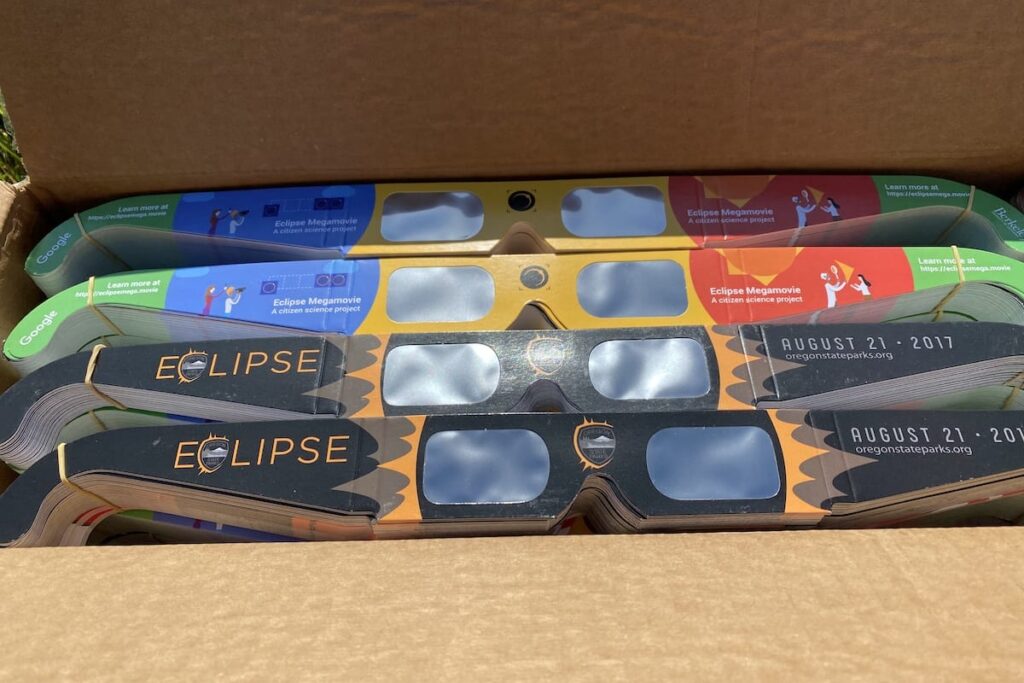
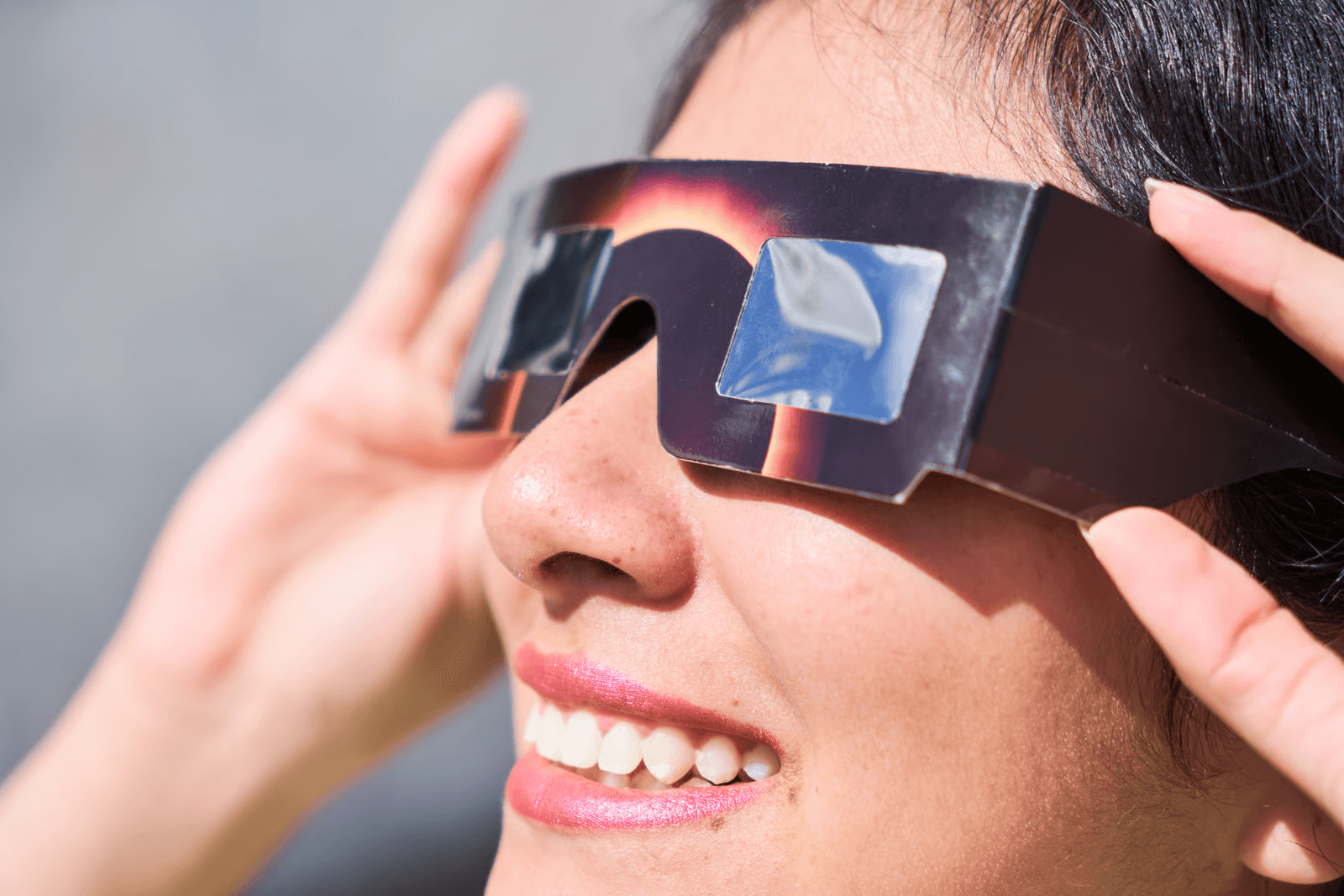
Proper solar eclipse glasses allow you to look safely at the Sun and see the Moon gradually passing across it. Ordinary sunglasses are not suitable, no matter how dark they are.
Before using eclipse glasses, check that they are undamaged and obtained from a reputable supplier.
Children should always be supervised when observing the Sun.
Can I use binoculars or a telescope?
Never look at the Sun through ordinary binoculars, telescopes or camera lenses.
The concentrated sunlight produced by optical equipment can cause severe and permanent eye damage.
Telescopes and binoculars can only be used for direct solar observation when fitted with an appropriate solar filter designed to cover the front aperture of the instrument.
If you’re unsure, don’t risk it. Eclipse glasses or an indirect projection method are the simplest ways to enjoy the eclipse safely.
What if I don’t have eclipse glasses?
There are other ways to observe a partial solar eclipse without looking directly at the Sun.
One of the easiest is a simple pinhole projector. A small hole in a piece of card can project an image of the eclipsed Sun onto another surface, allowing you to watch the changing shape of the Sun safely.
Even the tiny gaps between leaves on a tree can act as natural pinhole projectors during an eclipse, producing lots of little crescent-shaped images of the Sun on the ground.
Find a solar eclipse event near you
Astronomy societies, observatories and other organisations around the UK are expected to hold public observing events for the eclipse.
These are a great way to experience the eclipse, particularly if you don’t have your own observing equipment. Many events will have experienced astronomers and specially filtered solar telescopes offering safe, close-up views of the eclipsed Sun.
Check the Go Stargazing website nearer the time to find solar eclipse observing events taking place in your area.
And elsewhere, the Sun will disappear completely…
While we see a partial eclipse from the UK, Monday 2 August 2027 will produce one of the most impressive total solar eclipses of the decade.
The path of totality crosses southern Spain and Gibraltar before continuing across North Africa, including Morocco, Algeria, Tunisia, Libya and Egypt, and onwards across parts of the Middle East and Indian Ocean.
Those fortunate enough to be inside the path of totality will see the Moon completely cover the Sun, briefly turning day into darkness.
For those of us staying in the UK, however, there’s still a spectacular partial eclipse to look forward to.
Make a note in your diary: Monday 2 August 2027, with maximum eclipse at around 10am.
Let’s hope for clear skies!